
 Welcome
Your adventure navigator
A free travel companion for the destination you are in. Here is how it works:
Swipe the destination
One card per screen — places worth going to and local stories. Swipe up for the next one, sideways to read more.
Collect your stamps
Visit a place, add a photo — that is a stamp in your Pass. No GPS, no deadline, at your own pace.
Walk the route you actually built
Save favorites from the feed, drop them on today's route and open it straight in Google Maps.
Free to start
Sign up in seconds to save favorites and start your collection.
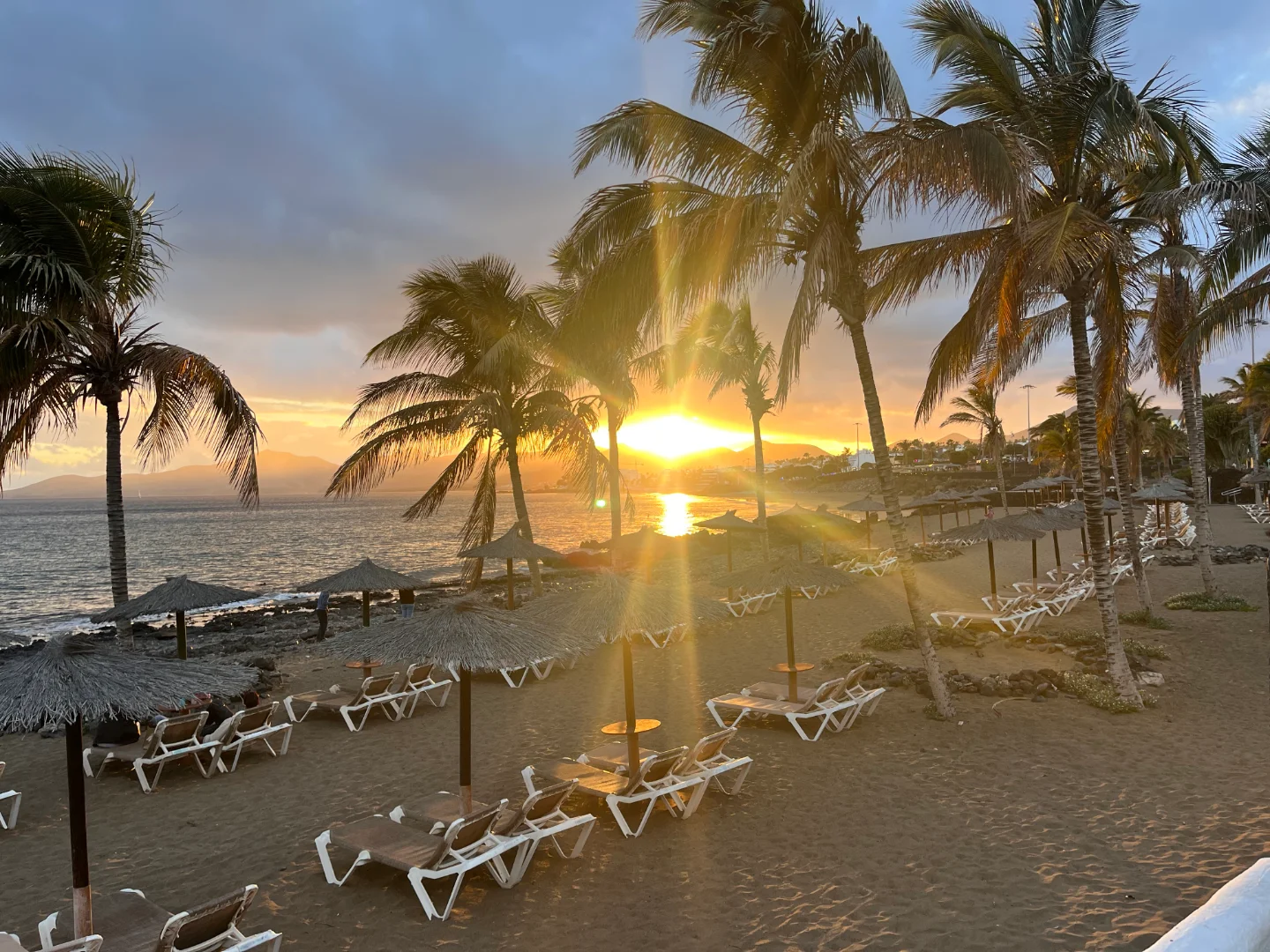
A Beach for Every Mood
Two hundred kilometres of coastline, and almost none of it alike. Lanzarote's beaches change character every few kilometres, because the same trade winds that make one bay a mirror turn the next one into an ocean. Choosing well is the difference between a perfect day and a windy one.
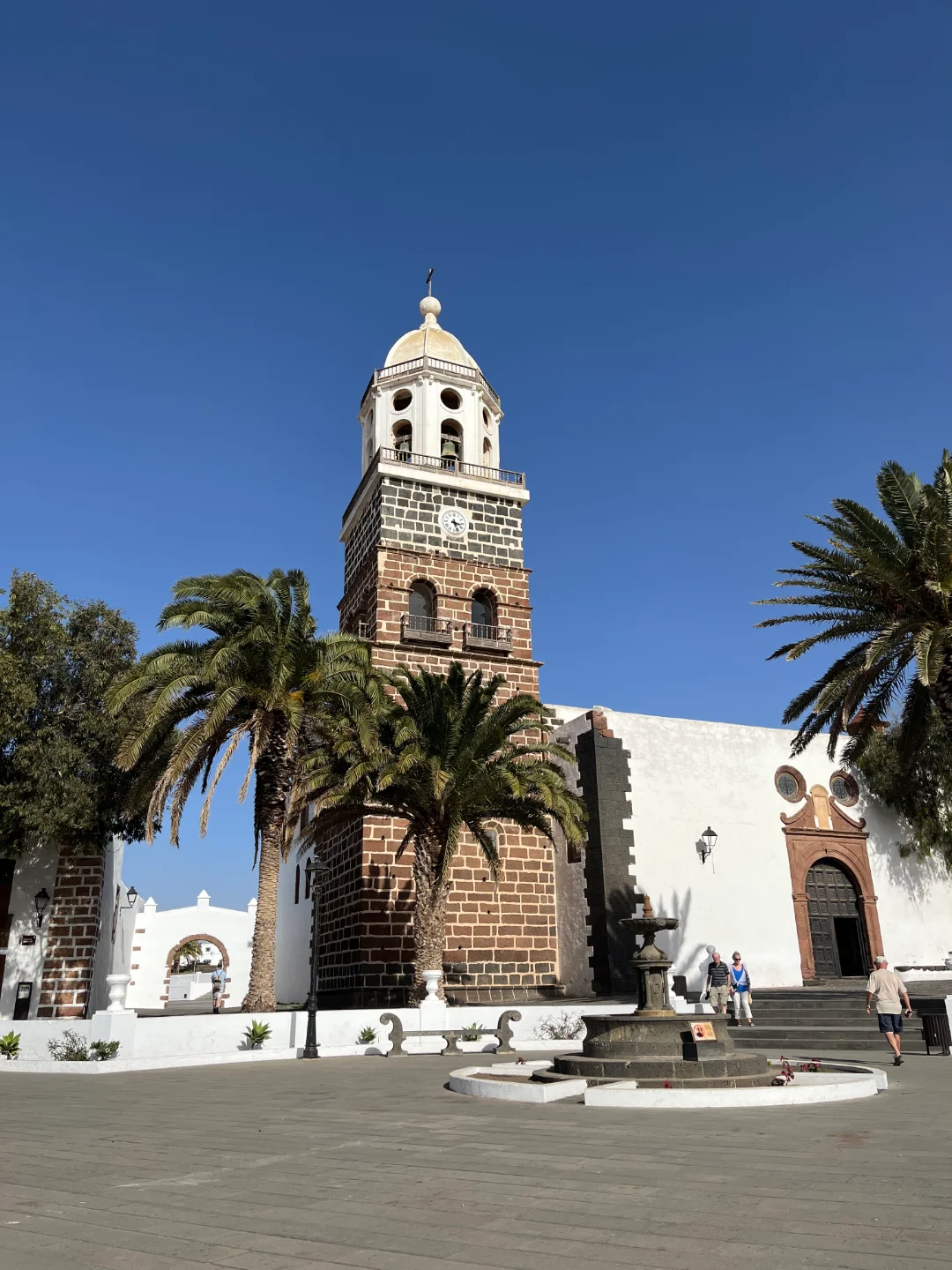
A Thousand Years of Stories
Before the beaches and the volcano tours, Lanzarote was already old. The island's first inhabitants, the Majos, arrived from North Africa many centuries before Europeans, and learned to survive on an island with almost no fresh water — herding goats, farming barley, storing rain in hollows of the rock, and leaving behind enigmatic carvings and the foundations of their stone houses.
Playa Blanca & Papagayo
No photos, no spoilers — go and discover it for yourself.
4 places
Swipe to see them
Playa Blanca & Papagayo · 1/4
Museo Atlántico (submarino)
Sculptures standing on the seabed, reached only by diving.
Playa Blanca & Papagayo · 2/4
Castillo de las Coloradas
An 18th-century watchtower on the cliffs above the sea.
Playa Blanca & Papagayo · 3/4
Faro de Pechiguera
Sunset at the island's southwest tip, by the lighthouse.
Playa Blanca & Papagayo · 4/4
Playa de Papagayo
Turquoise coves sheltered by golden cliffs.
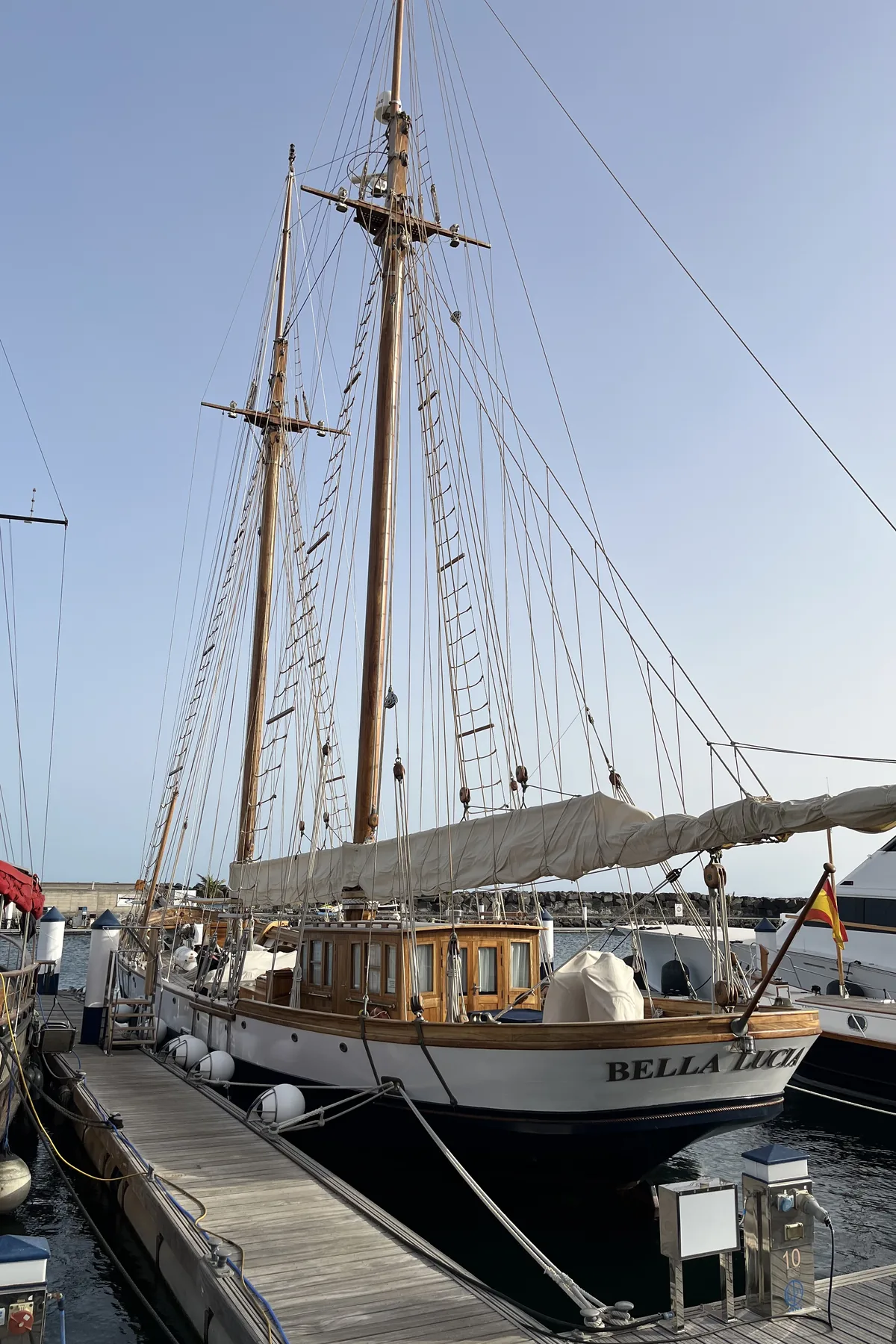
Sailing: navigating the sea of the trade winds
Lanzarote was discovered under sail — literally: legendary Phoenicians, medieval Genoese and Norman conquerors all arrived here that way — and six centuries later it remains a land of sails. Its waters are a perfect classroom: reliable trade winds (alisios), open sea free of treacherous reefs and first-class marinas in Arrecife and Playa Blanca. Every autumn, dozens of yachts under European flags call here before the great leap: crossing the Atlantic. The island's children learn in Optimists in the bay of Arrecife, visitors charter skippered catamarans for the perfect day out — Papagayo, anchor down, tuna on board — and the romantics keep scanning the horizon for the silhouette of an old sailing ship. Here, hoisting a sail is keeping an appointment with history.
Sailing: navigating the sea of the trade winds
Lanzarote was discovered under sail — literally: legendary Phoenicians, medieval Genoese and Norman conquerors all arrived here that way — and six centuries later it remains a land of sails. Its waters are a perfect classroom: reliable trade winds (alisios), open sea free of treacherous reefs and first-class marinas in Arrecife and Playa Blanca. Every autumn, dozens of yachts under European flags call here before the great leap: crossing the Atlantic. The island's children learn in Optimists in the bay of Arrecife, visitors charter skippered catamarans for the perfect day out — Papagayo, anchor down, tuna on board — and the romantics keep scanning the horizon for the silhouette of an old sailing ship. Here, hoisting a sail is keeping an appointment with history.
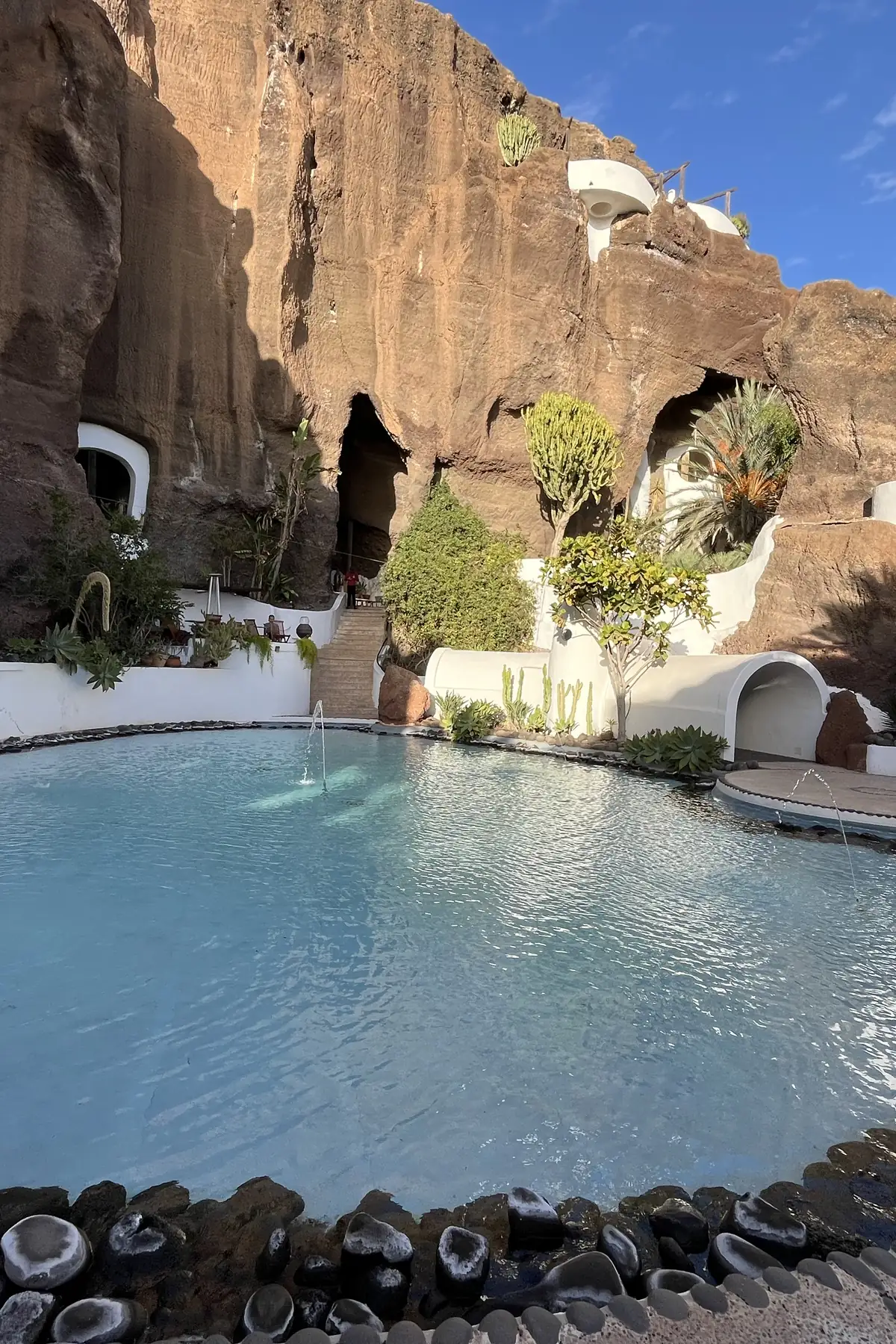
Museums of Lanzarote
From Manrique's house to a museum under the sea. The essentials, with a link to each official page.
22 museums
Swipe to see them
Museums of Lanzarote · 1/22
A Casa José Saramago
Home of the Nobel laureate in Literature (A Vigia)
Tías
solo con reserva
Museums of Lanzarote · 2/22
Casa Ajei
Culture and crafts house, exhibitions and events
San Bartolomé
habitualmente gratis
Museums of Lanzarote · 3/22
Casa Museo César Manrique
The artist's last home
Haría
consultar · combinado con la Fundación 15 €
Museums of Lanzarote · 4/22
Casa Museo del Campesino
Rural ethnographic museum and Monument to Fertility
Mozaga (San Bartolomé)
gratis
Museums of Lanzarote · 5/22
Casa-Museo del Timple
The Canarian timple (Spínola Palace)
Teguise
consultar
Museums of Lanzarote · 6/22
Centro de Visitantes de Mancha Blanca
Volcanology and the 1730-36 eruption, gateway to Timanfaya
Mancha Blanca (Tinajo)
gratis
Museums of Lanzarote · 8/22
Fundación César Manrique
The artist's house-studio (Taro de Tahíche)
Tahíche (Teguise)
8 € · combinado con Casa-Museo Haría 15 €
Museums of Lanzarote · 9/22
Jameos del Agua
Volcanic cave with auditorium and lake (César Manrique)
Haría
desde 17 €
Museums of Lanzarote · 10/22
Jardín de Cactus
Cactus garden, Manrique's last work
Guatiza (Teguise)
9 €
Museums of Lanzarote · 11/22
La Casa Amarilla
Former Cabildo seat, exhibitions on Lanzarote's memory
Arrecife
consultar
Museums of Lanzarote · 12/22
MIAC — Castillo de San José
International Museum of Contemporary Art
Arrecife
5,40 €
Museums of Lanzarote · 13/22
Mirador del Río
Lookout-artwork over El Río (Manrique)
Haría
9 €
Museums of Lanzarote · 14/22
Montañas del Fuego — Timanfaya
Volcanic national park
Tinajo / Yaiza
30 €
Museums of Lanzarote · 15/22
Museo Aeronáutico
History of Canarian aviation (old terminal)
Aeropuerto (San Bartolomé)
consultar
Museums of Lanzarote · 16/22
Museo Agrícola El Patio
Agricultural and ethnographic museum
Tiagua (Teguise)
consultar
Museums of Lanzarote · 17/22
Museo Atlántico
Underwater sculpture museum (diving)
Playa Blanca (Yaiza)
desde 48 € (buceador certificado) · 149 € (bautismo)
Museums of Lanzarote · 18/22
Museo de Historia de Arrecife
Archaeology and island history (San Gabriel Castle)
Arrecife
habitualmente gratis
Museums of Lanzarote · 19/22
Museo de la Piratería
Pirate history (Santa Bárbara Castle)
Teguise
consultar
Museums of Lanzarote · 20/22
Museo del Vino El Grifo
Wine museum, the oldest winery in the Canaries
La Geria (San Bartolomé)
museo gratis · visita guiada con cata 50 €
Museums of Lanzarote · 21/22
Museo Etnográfico Tanit
Ethnography and traditions of Lanzarote
San Bartolomé
consultar
Museums of Lanzarote · 22/22
Museo LagOmar
House-museum (Omar Sharif's residence) and art
Nazaret (Teguise)
10 € adultos · 8 € niños hasta 12
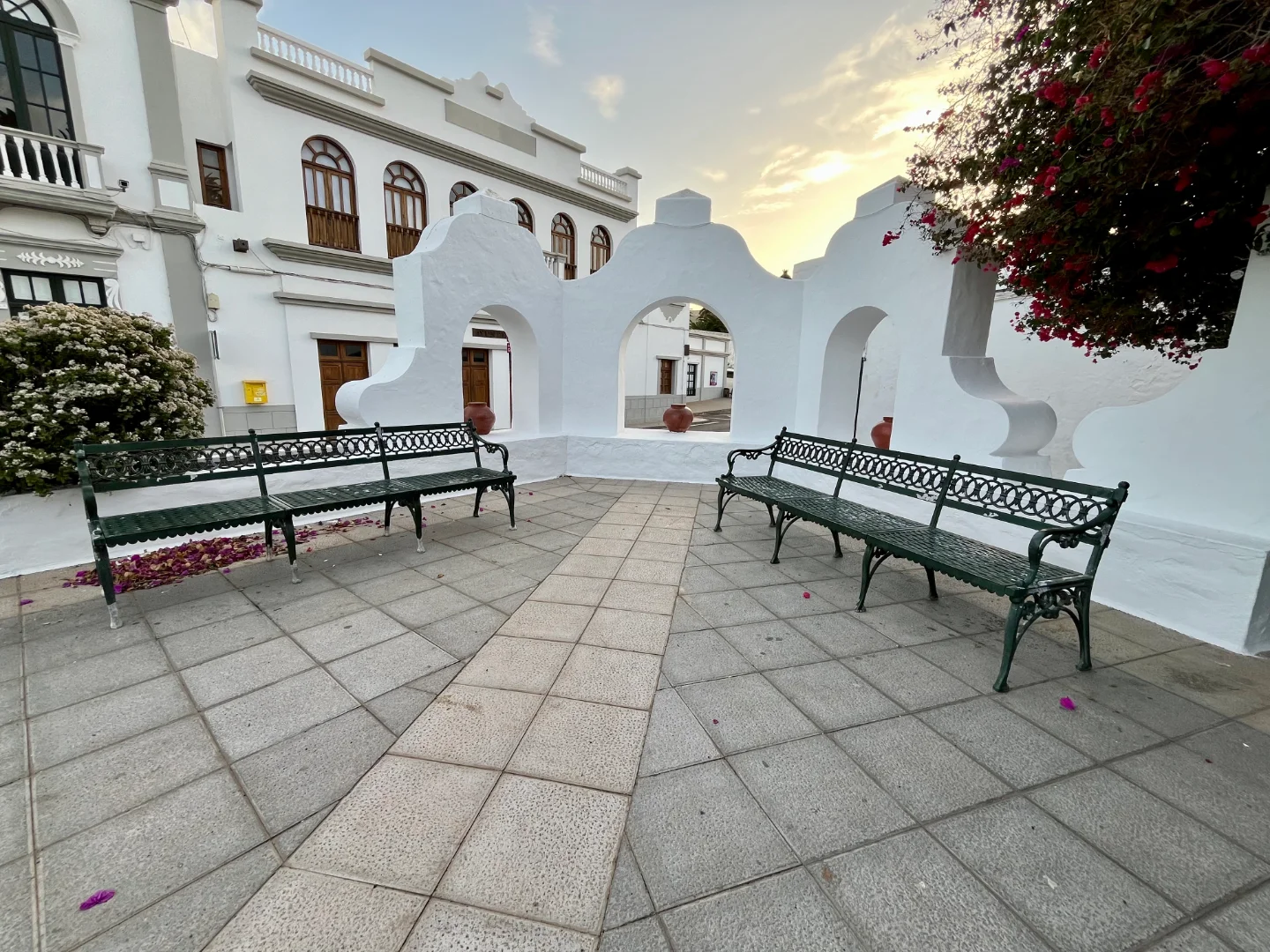
The Island That Chose Restraint
Lanzarote does not look like other holiday islands, and that is not luck. It is the result of decisions taken decades ago, when this island was poor and could have sold itself to anyone.
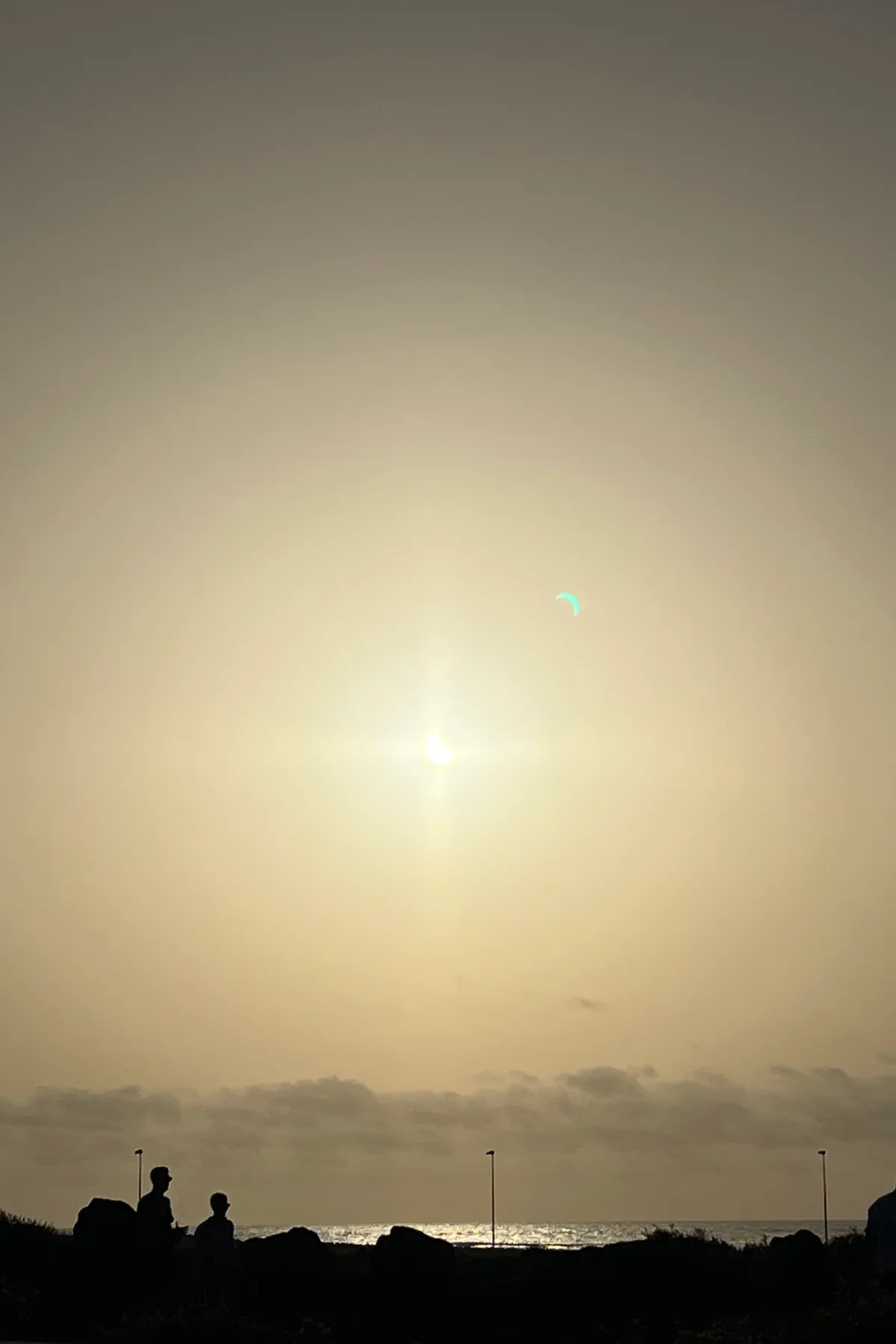
What exactly is the calima?
One day the horizon disappears, the volcanoes turn into ghosts and the sky takes on the yellow tint of a Western: welcome to the calima (Saharan dust haze). It is neither fog nor pollution: it is Saharan dust in suspension — ultra-fine particles that the east wind lifts in the desert, just 130 km away, and carries over here, often with hot air. It usually lasts two to four days, sends thermometers up and visibility down. Is it a nuisance? A little, above all for people with asthma or allergies: on such a day, better indoor plans and plenty of water. Is it dangerous? Rarely — although in February 2020 a historic calima went as far as closing every airport in the Canaries. And in exchange it delivers the most dramatic sunsets of the year.
What exactly is the calima?
One day the horizon disappears, the volcanoes turn into ghosts and the sky takes on the yellow tint of a Western: welcome to the calima (Saharan dust haze). It is neither fog nor pollution: it is Saharan dust in suspension — ultra-fine particles that the east wind lifts in the desert, just 130 km away, and carries over here, often with hot air. It usually lasts two to four days, sends thermometers up and visibility down. Is it a nuisance? A little, above all for people with asthma or allergies: on such a day, better indoor plans and plenty of water. Is it dangerous? Rarely — although in February 2020 a historic calima went as far as closing every airport in the Canaries. And in exchange it delivers the most dramatic sunsets of the year.
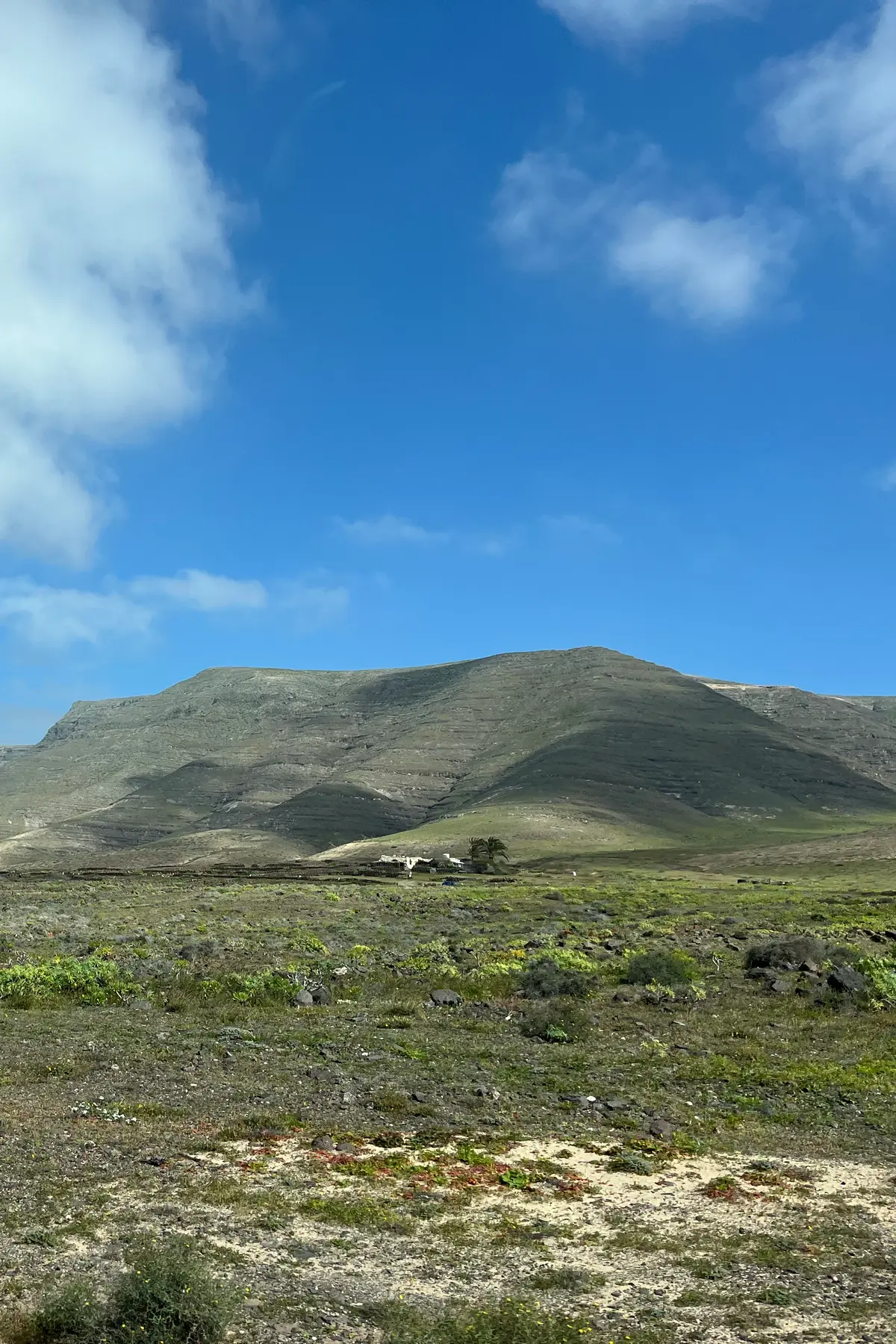
When it rains (yes, it happens): the island's rarest spectacle
A handful of days each winter, the impossible occurs: real rain on Lanzarote. Don't sulk — celebrate. Rain here is an event with its own rituals: locals stand in doorways watching it like fireworks; the barrancos briefly remember they're rivers; waterfalls appear on the Famara cliff for a few glorious hours; and within a fortnight the island performs its greatest magic trick — a green flush over the volcanic plains, poppies and wild mustard in the ash fields, La Geria's vines glowing against black picón. February after a wet January is the island's secret best month. So if clouds burst on your holiday: drive north, watch the cliff run silver, then come back in ten days if you can. You'll have seen something many repeat visitors never have.
When it rains (yes, it happens): the island's rarest spectacle
A handful of days each winter, the impossible occurs: real rain on Lanzarote. Don't sulk — celebrate. Rain here is an event with its own rituals: locals stand in doorways watching it like fireworks; the barrancos briefly remember they're rivers; waterfalls appear on the Famara cliff for a few glorious hours; and within a fortnight the island performs its greatest magic trick — a green flush over the volcanic plains, poppies and wild mustard in the ash fields, La Geria's vines glowing against black picón. February after a wet January is the island's secret best month. So if clouds burst on your holiday: drive north, watch the cliff run silver, then come back in ten days if you can. You'll have seen something many repeat visitors never have.
Arrecife & Costa Teguise
No photos, no spoilers — go and discover it for yourself.
6 places
Swipe to see them
Arrecife & Costa Teguise · 1/6
Castillo de San José · MIAC (Arrecife)
Modern art inside an 18th-century fortress by the sea.
Arrecife & Costa Teguise · 2/6
Castillo de San Gabriel
A small fortress on an islet, reached by an old bridge.
Arrecife & Costa Teguise · 3/6
Charco de San Ginés (Arrecife)
Fishing boats resting in a lagoon in the heart of Arrecife.
Arrecife & Costa Teguise · 4/6
Iglesia de San Ginés
The patron saint's church in the old heart of Arrecife.
Arrecife & Costa Teguise · 5/6
Playa del Reducto
A calm city beach sheltered by a reef.
Arrecife & Costa Teguise · 6/6
Pueblo Marinero (Costa Teguise)
A whitewashed square designed by Manrique for evenings out.

Speak like a conejero: little words that open the island
First mystery solved: people from Lanzarote are conejeros — "rabbit people", most likely after the island's old abundance of rabbits — and they carry the nickname with a grin. Learn ten words and doors open. The guagua is the bus (say "wa-wa"). Chacho/chacha — from muchacho — starts half the island's sentences; ¡chos! is pure Lanzarote astonishment. A fisco is a little bit ("un fisco de queso"). Godos are mainland Spaniards (teasing, mostly affectionate). Enarenado is the ash-mulch farming, rofe or picón the volcanic gravel itself, the jable the sand corridor. Papas not patatas, millo not maíz — and "te vas a la playa, ¿no?" ends in that rising "¿no?" that makes everything a friendly question. Try them. Canarian Spanish is soft, musical and allergic to hurry — like the island.
Speak like a conejero: little words that open the island
First mystery solved: people from Lanzarote are conejeros — "rabbit people", most likely after the island's old abundance of rabbits — and they carry the nickname with a grin. Learn ten words and doors open. The guagua is the bus (say "wa-wa"). Chacho/chacha — from muchacho — starts half the island's sentences; ¡chos! is pure Lanzarote astonishment. A fisco is a little bit ("un fisco de queso"). Godos are mainland Spaniards (teasing, mostly affectionate). Enarenado is the ash-mulch farming, rofe or picón the volcanic gravel itself, the jable the sand corridor. Papas not patatas, millo not maíz — and "te vas a la playa, ¿no?" ends in that rising "¿no?" that makes everything a friendly question. Try them. Canarian Spanish is soft, musical and allergic to hurry — like the island.
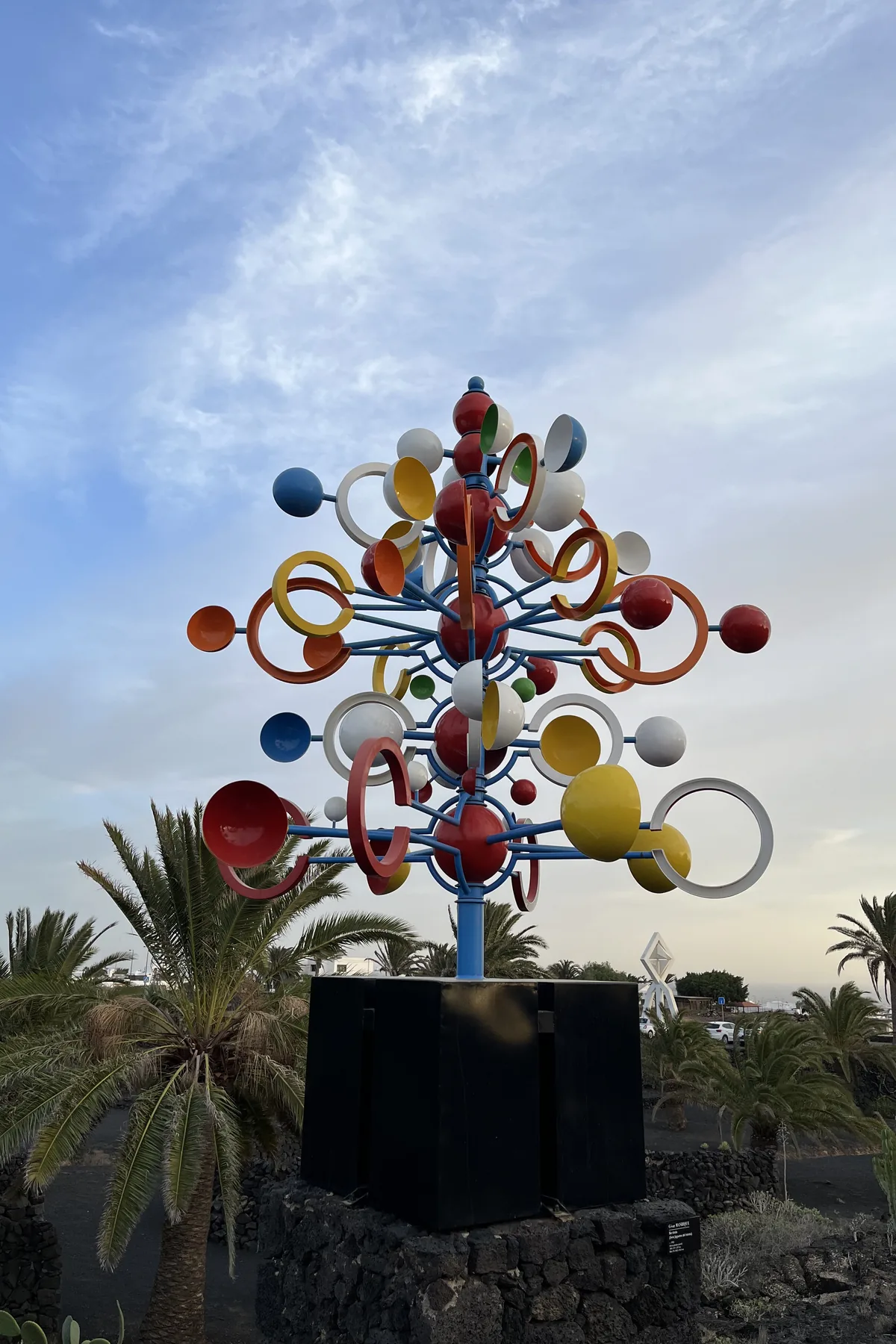
Exhibitions right now
What is on show on the island these weeks. Dates, venue and the official page.
3 exhibitions
Swipe to see them
Exhibitions right now · 1/3
until Jan 16
Germán Páez — Wild Palms
Exposición
El Almacén
Libre y gratuita
Exhibitions right now · 2/3
until Jan 16
Jesús Madriñán — Lanzarote
Exposición
El Almacén
Libre y gratuita
Exhibitions right now · 3/3
until Jan 16
María Rosa Aránega — Atlas Lanzarote
Exposición
El Almacén
Libre y gratuita
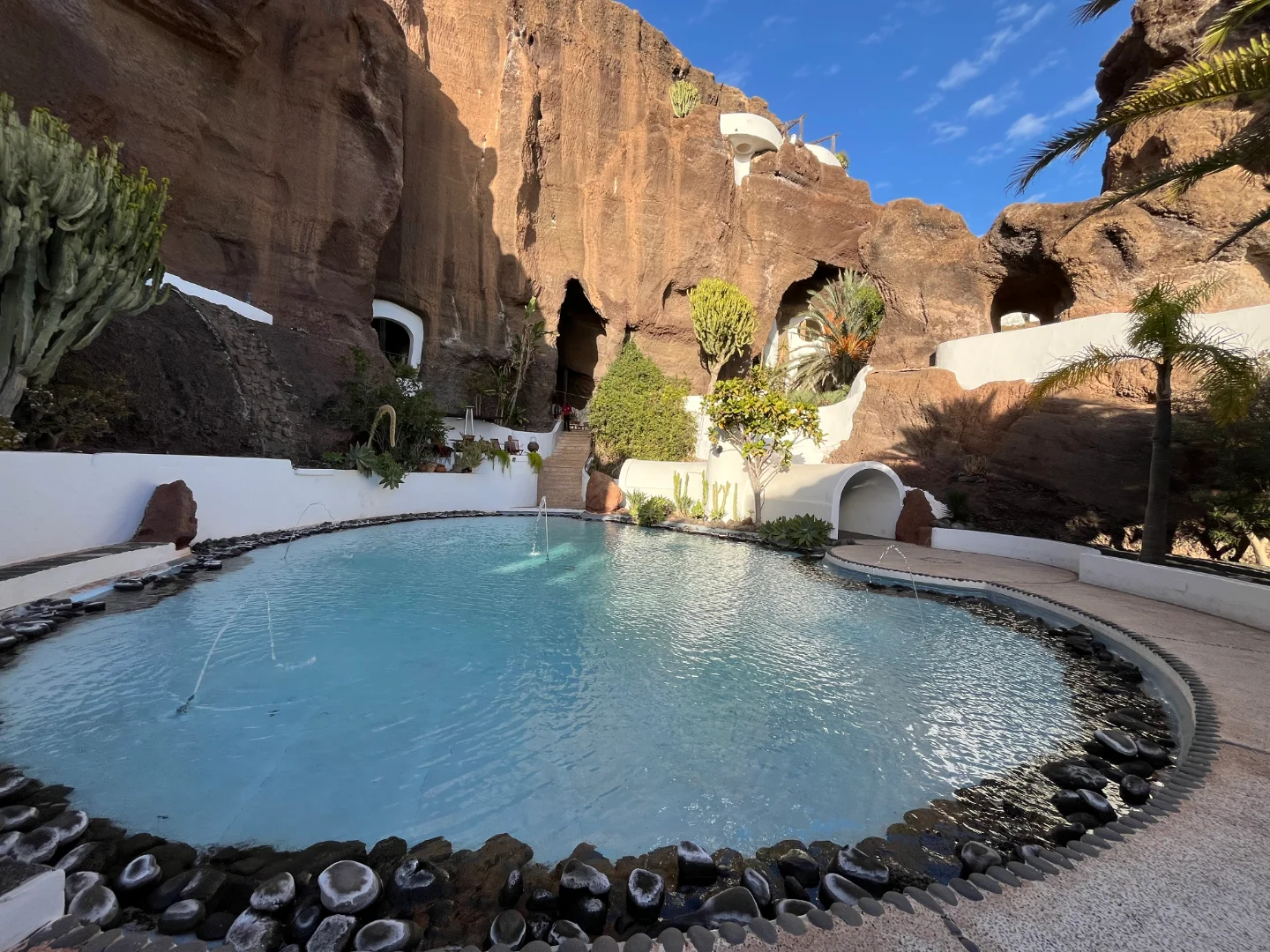
César Manrique: The Artist Who Shaped an Island
Few places on Earth carry the signature of a single artist the way Lanzarote carries César Manrique's. Painter, sculptor, architect and activist, he did not simply decorate his island — he changed how it thinks about itself.
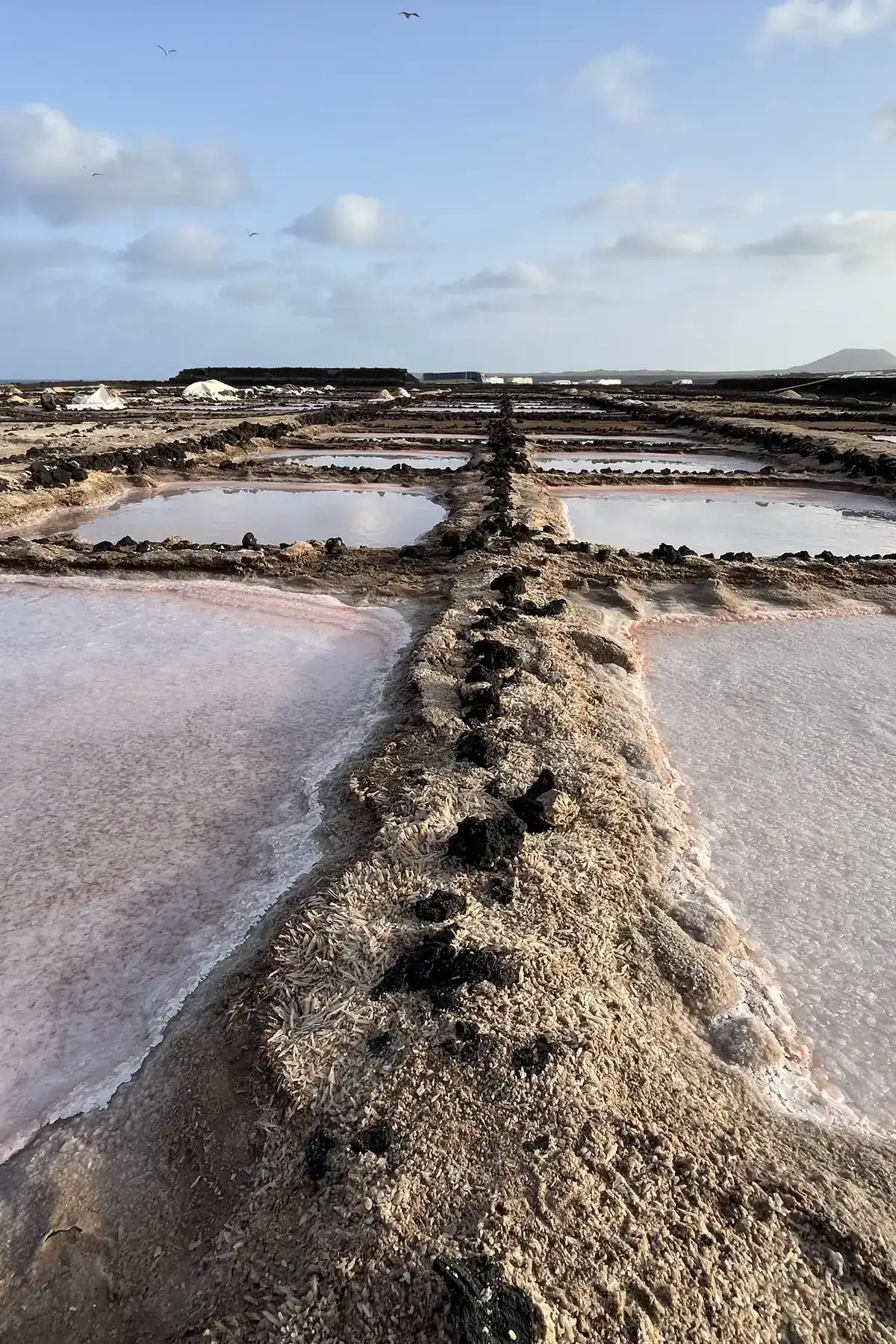
White gold: the salt pans that fed half a fleet
That pink, white and ochre chessboard beside the sea in the south-west is not modern art: it is the Salinas de Janubio, the largest salt pans in the Canaries. Before tourism, salt was the island's oil — without it there was no way to preserve fish, and the fleet working the African grounds depended on these crystals. Janubio came to produce thousands of tonnes a year with a perfect technology: sea, wind, sun and hands. The pink tones are provided by microorganisms that adore extreme salt; the flamingos, on migratory stopover, provide the rest. Today the salt is once again harvested by hand — and Janubio's flor de sal (fleur de sel) travels to the finest kitchens in Spain.
White gold: the salt pans that fed half a fleet
That pink, white and ochre chessboard beside the sea in the south-west is not modern art: it is the Salinas de Janubio, the largest salt pans in the Canaries. Before tourism, salt was the island's oil — without it there was no way to preserve fish, and the fleet working the African grounds depended on these crystals. Janubio came to produce thousands of tonnes a year with a perfect technology: sea, wind, sun and hands. The pink tones are provided by microorganisms that adore extreme salt; the flamingos, on migratory stopover, provide the rest. Today the salt is once again harvested by hand — and Janubio's flor de sal (fleur de sel) travels to the finest kitchens in Spain.
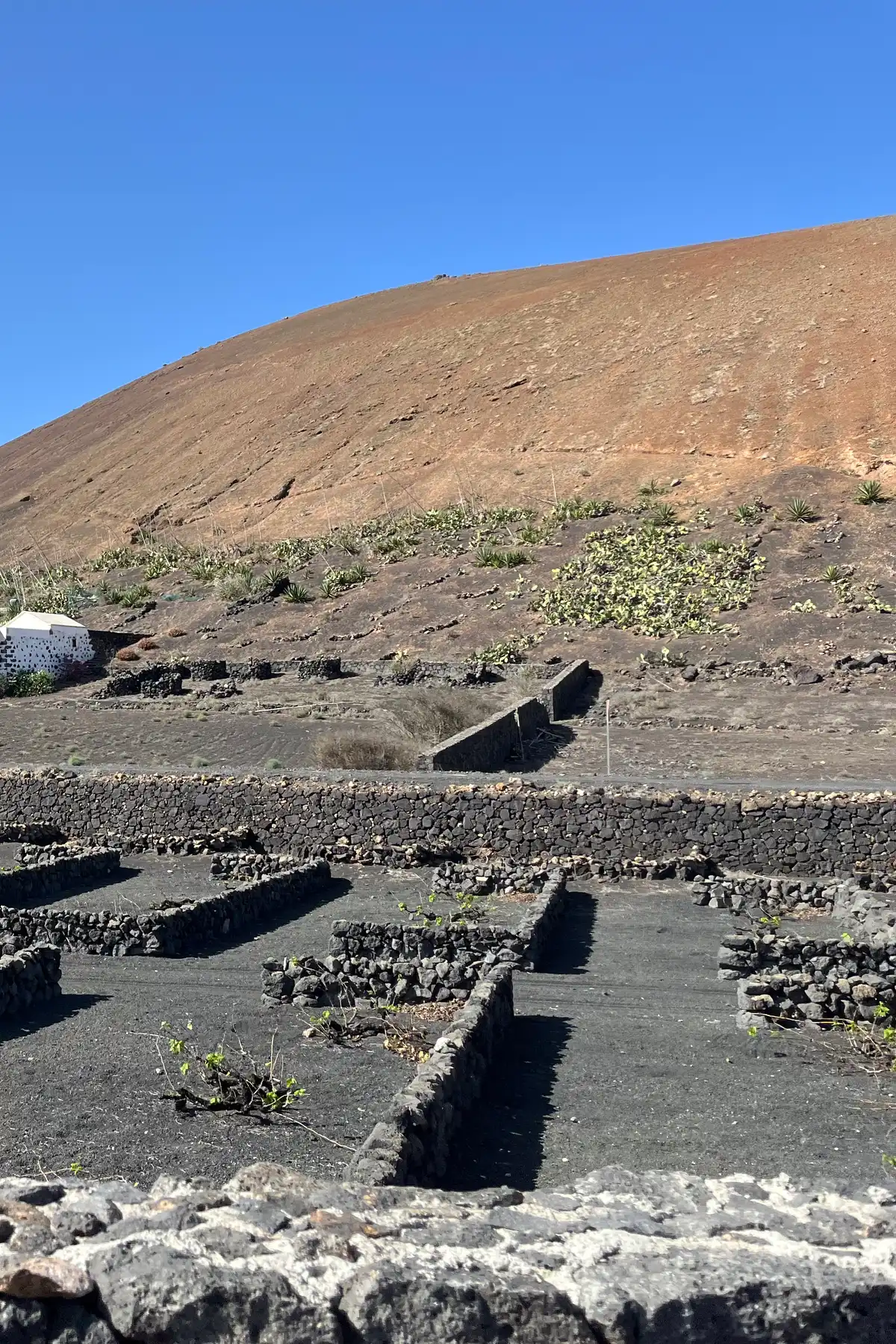
Wine from the ashes: La Geria and the miracle of malvasía volcánica
After the great eruptions buried their fields, Lanzarote's farmers did something between genius and defiance: they dug through the ash and planted vines in the ground beneath. The result is La Geria — thousands of funnel-shaped hollows in black picón, each sheltering one vine behind a low stone crescent, a landscape so improbable it looks designed. It works because the ash is a sponge: it drinks the night's humidity and feeds it to the roots, no irrigation needed. From this moonscape comes malvasía volcánica — crisp, saline, mineral whites that win international medals — harvested from July, among the earliest in Europe, and made in bodegas that include the oldest winery in the Canaries, pouring since 1775. Toured, tasted and best at sunset, when the black hollows fill with gold.
Wine from the ashes: La Geria and the miracle of malvasía volcánica
After the great eruptions buried their fields, Lanzarote's farmers did something between genius and defiance: they dug through the ash and planted vines in the ground beneath. The result is La Geria — thousands of funnel-shaped hollows in black picón, each sheltering one vine behind a low stone crescent, a landscape so improbable it looks designed. It works because the ash is a sponge: it drinks the night's humidity and feeds it to the roots, no irrigation needed. From this moonscape comes malvasía volcánica — crisp, saline, mineral whites that win international medals — harvested from July, among the earliest in Europe, and made in bodegas that include the oldest winery in the Canaries, pouring since 1775. Toured, tasted and best at sunset, when the black hollows fill with gold.
La Geria & the centre
No photos, no spoilers — go and discover it for yourself.
8 places
Swipe to see them
La Geria & the centre · 1/8
Fundación César Manrique (Tahíche)
Manrique's home, built inside volcanic bubbles.
La Geria & the centre · 2/8
LagOmar (Nazaret)
A house carved into an old quarry, linked to Omar Sharif.
La Geria & the centre · 3/8
Museo Agrícola El Patio (Tiagua)
An old farm estate with windmills and island wine.
La Geria & the centre · 4/8
Museo Etnográfico Tanit
How islanders once lived, kept inside a family house.
La Geria & the centre · 5/8
Casa-Museo del Campesino (Mozaga)
Manrique's tribute to the island's farmers.
La Geria & the centre · 6/8
Ermita de los Dolores (Mancha Blanca)
The chapel whose Virgin is said to have stopped the lava.
La Geria & the centre · 7/8
La Geria — vinha em hoyos
Vines growing in black ash pits behind stone walls.
La Geria & the centre · 8/8
Iglesia de San Bartolomé
The village's old parish church, facing a quiet square.
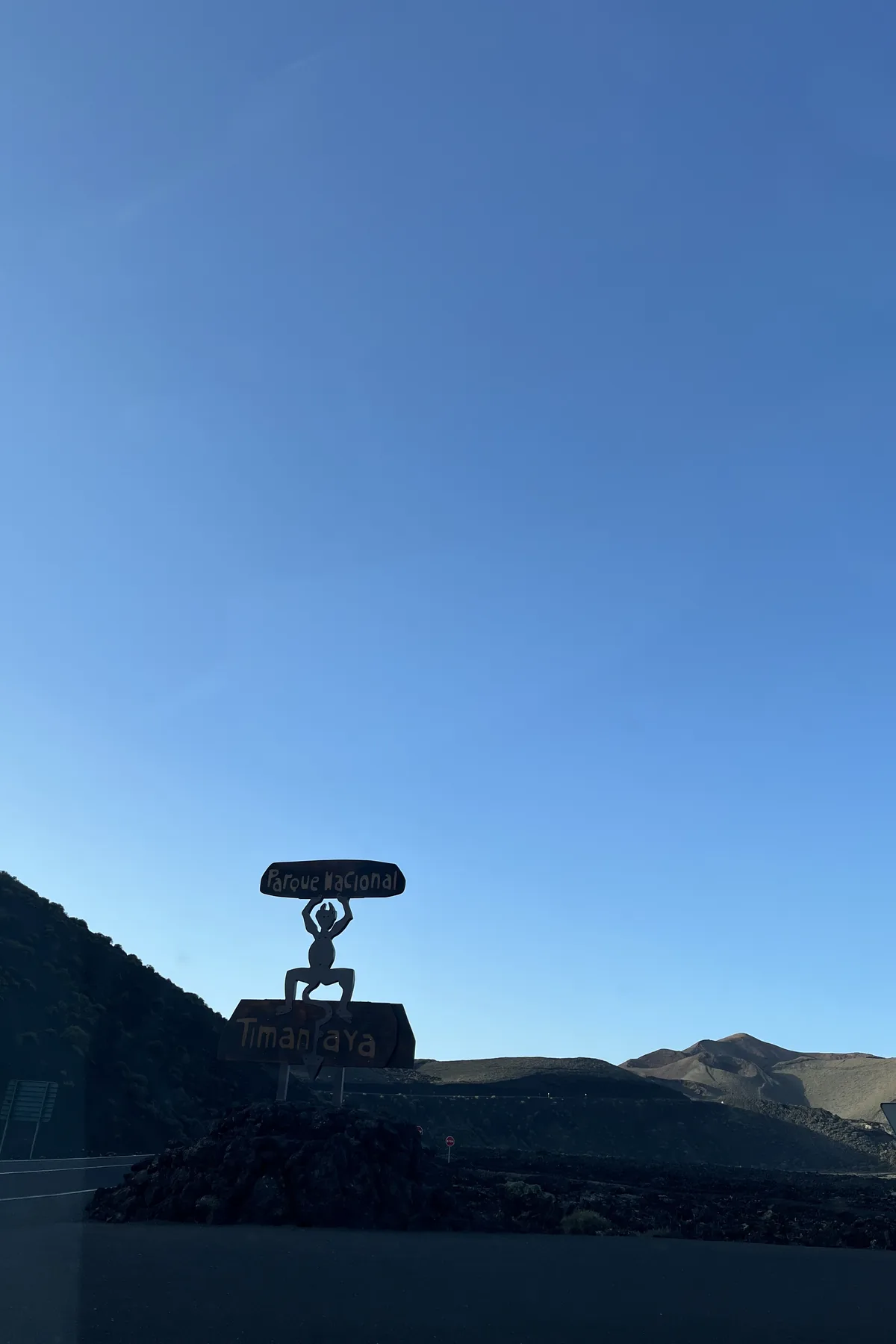
Tales of the Timanfaya devil
Sit down — this one is better told slowly. When the earth opened in 1730, the islanders saw in the flames what their times allowed them to see: the devil himself dancing among the volcanoes. From that fear were born tales still whispered today: figures dancing in the glow, pacts, cries beneath the earth. And a more tender one: the tale of old Hilario, the hermit who after the eruptions settled in the very heart of the fire with his camel, planted a fig tree on the volcano's warmth — and the fig tree, they say, gave flowers but never fruit: it refused to feed the devil. The hillock where he lived bears his name, and on top of it today stands the restaurant that roasts chickens with volcanic heat. Tales, here, end at the table.
The cochineal: the insect that dyed half of Europe red
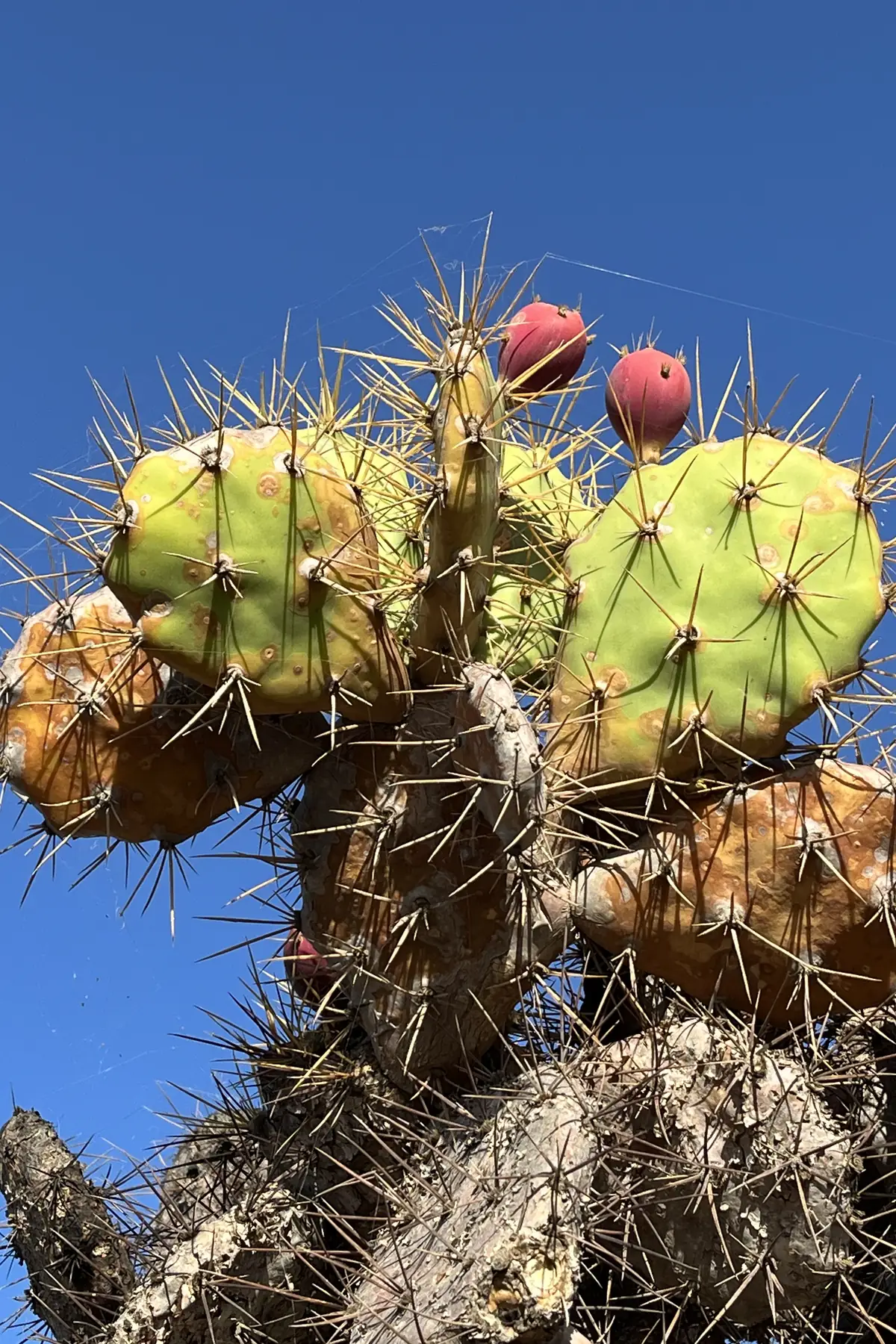
Those prickly-pear plantations around Guatiza and Mala are not decorative: they are a colour factory. On their pads lives the cochineal, a tiny insect which, dried and ground, produces carmine — one of the most intense and valuable reds in history. In the 19th century, this little bug made whole families rich: the island exported tonnes of "grana" to dye the uniforms, the silks and even the lips of half of Europe. Synthetic dyes sank the business, but Lanzarote never stopped harvesting it: today it is one of the few places in Europe where it is still produced, with a designation of origin of its own. And yes — carmine is still in lipsticks and foods. Check the label: E-120.
The cochineal: the insect that dyed half of Europe red
Those prickly-pear plantations around Guatiza and Mala are not decorative: they are a colour factory. On their pads lives the cochineal, a tiny insect which, dried and ground, produces carmine — one of the most intense and valuable reds in history. In the 19th century, this little bug made whole families rich: the island exported tonnes of "grana" to dye the uniforms, the silks and even the lips of half of Europe. Synthetic dyes sank the business, but Lanzarote never stopped harvesting it: today it is one of the few places in Europe where it is still produced, with a designation of origin of its own. And yes — carmine is still in lipsticks and foods. Check the label: E-120.
Music & shows
Concerts, theatre, dance and festivals coming up on the island. Date, venue, price and the official page.
5 upcoming events
Swipe to see them
Music & shows · 1/5
Thu, Oct 22 · 08:00 PM
Los Sara Fontán — y Pura Márquez
Música
Auditorio Cueva de los Verdes
20 €
Music & shows · 2/5
Fri, Oct 23 · 08:00 PM
Vierdingo — Compañía Esteban Garrido
Teatro
El Almacén
10 €
Music & shows · 3/5
Fri, Oct 30 · 12:00 AM
Soraia Cardoso — esFADO
Música
El Almacén
10 €
Music & shows · 4/5
Fri, Nov 6 · 12:00 AM
Ana Viciosa, la señora de Tinajo — Compañía Regañiza
Teatro
Auditorio de Jameos del Agua
25 €
Music & shows · 5/5
Fri, Dec 11 · 12:00 AM
Clavelitos — En concierto
Música
El Almacén
5 €
The hanging garden of Famara
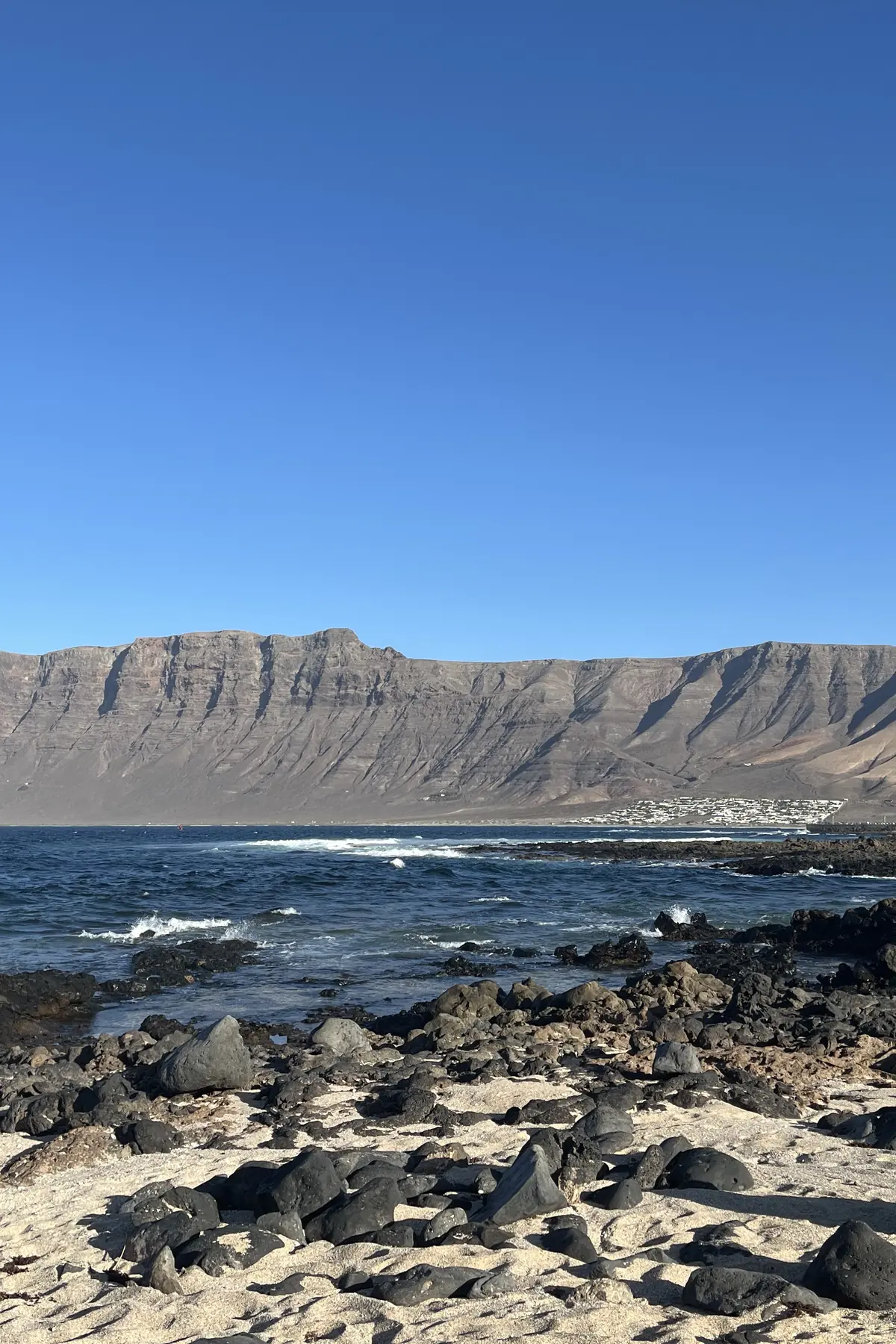
The Famara cliff is the island's highest rampart — and its secret botanical garden too. On its vertical ledges, where the goats never reached and the sea breeze leaves its dew each night, survive plants that grow nowhere else on the planet: more than a dozen exclusive species, with names that sound like treasure — the Famara everlasting (siempreviva de Famara), the cottony yesquera algodonera, the Lanzarote bejeque. Botanists from all over Europe make pilgrimages to this risco (cliff face) the way people visit a museum holding the only copy of each work. From the viewpoint, so can you: that 600-metre wall dropping to the sea is one of the best-kept natural jewels of the Canaries.
The hanging garden of Famara
The Famara cliff is the island's highest rampart — and its secret botanical garden too. On its vertical ledges, where the goats never reached and the sea breeze leaves its dew each night, survive plants that grow nowhere else on the planet: more than a dozen exclusive species, with names that sound like treasure — the Famara everlasting (siempreviva de Famara), the cottony yesquera algodonera, the Lanzarote bejeque. Botanists from all over Europe make pilgrimages to this risco (cliff face) the way people visit a museum holding the only copy of each work. From the viewpoint, so can you: that 600-metre wall dropping to the sea is one of the best-kept natural jewels of the Canaries.